Blog > Sell First or Buy First? How to Decide What’s Best
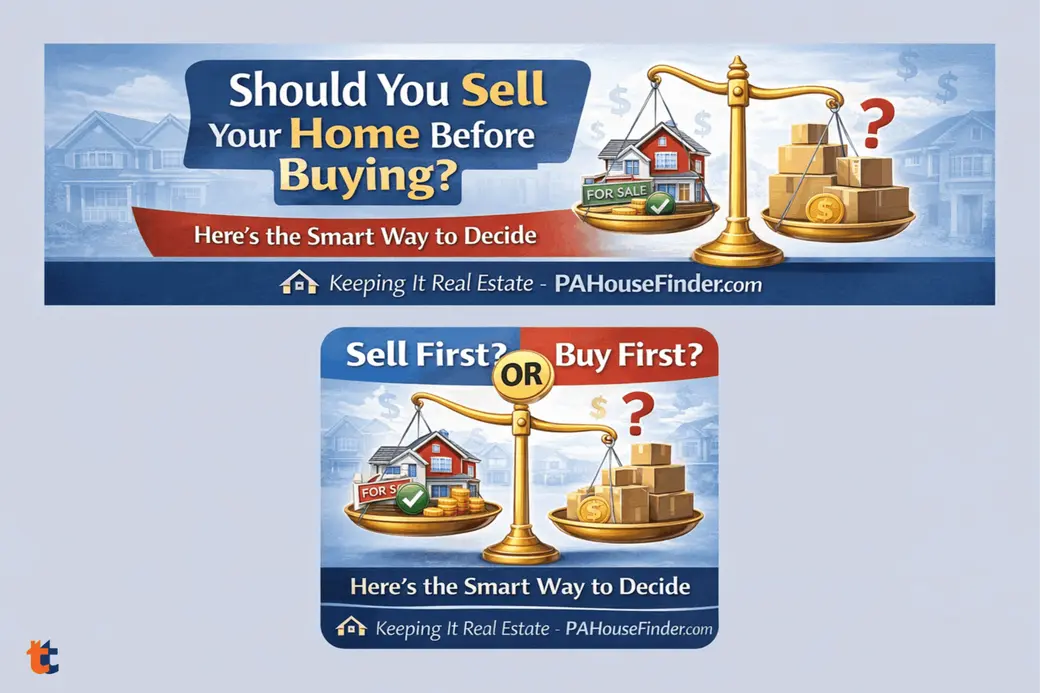
Should You Sell Your Home Before Buying? Here’s the Smart Way to Decide
This is one of the biggest questions sellers wrestle with:
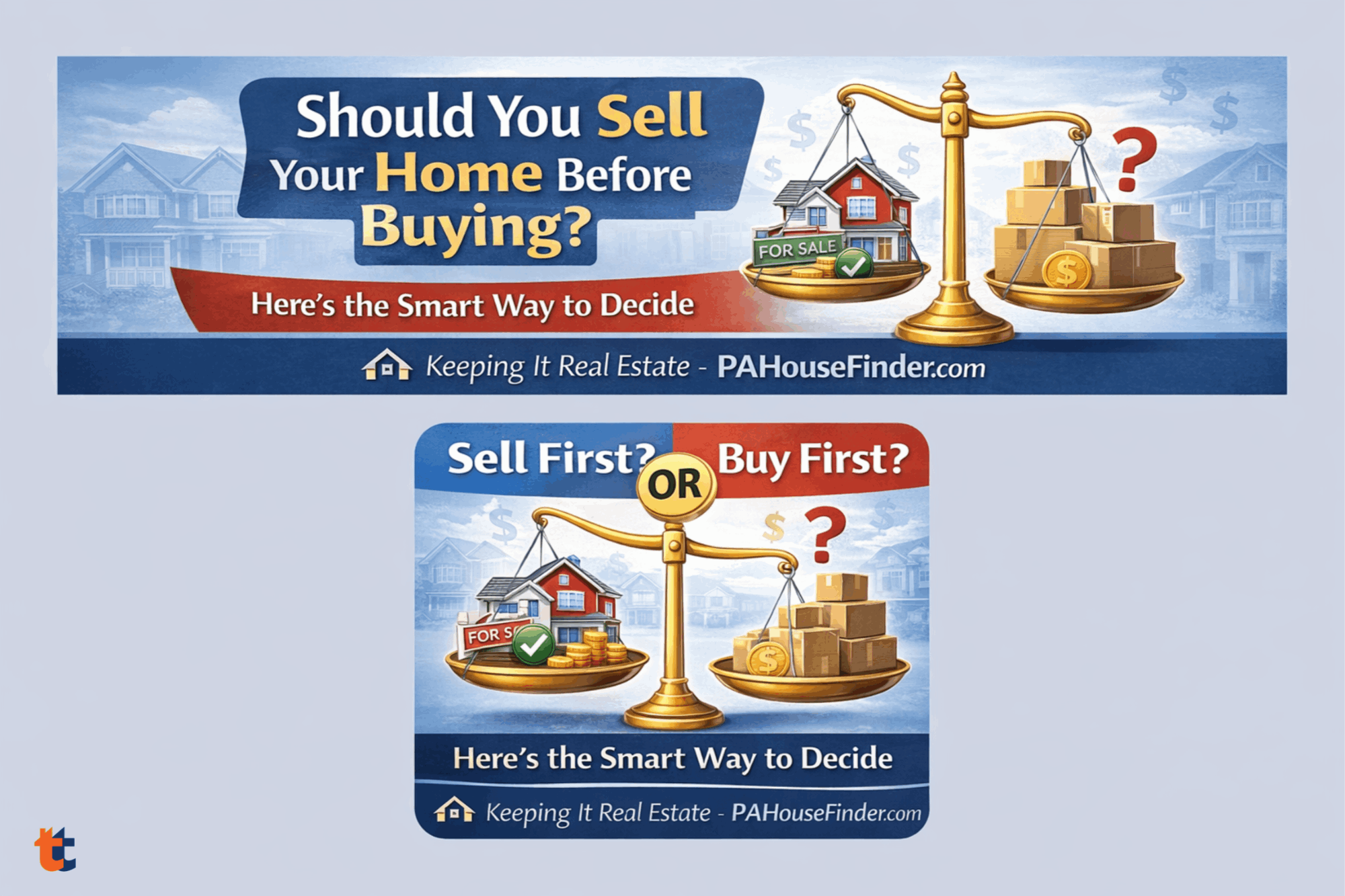
“Do I sell my home first… or buy first?”
And unfortunately, most people get the least helpful answer possible:
“Well… it depends.”
Not wrong — but not helpful either.
So let’s break this down the way it actually works in the real world, so you can make a smart decision based on your situation.
The Real Problem
This decision usually comes down to two fears:
- “I don’t want to be homeless.”
- “I don’t want to carry two mortgages.”
Both are valid.
And depending on the market and your finances, one of these risks will matter more than the other.
Option 1: Sell First
 Pros
Pros
You know exactly what you’re working with
Once your home sells, you know:
- your proceeds
- your budget
- your comfort level
No guessing.
No double payments
You avoid the risk of carrying two homes at once.
You’re a stronger buyer
A non-contingent buyer is far more attractive to sellers.
 Cons
Cons
You may need temporary housing
If you can’t find a home right away, you might need:
- short-term rental
- staying with family
- creative solutions
You may feel rushed
Once your home is sold, the clock is ticking.
Option 2: Buy First
Pros
You move on your timeline
No pressure to find something immediately.
Smoother transition
You can move once instead of twice.
Cons
Financial risk
You may carry:
- two mortgages
- two sets of expenses
Even if temporarily, it adds pressure.
Weaker negotiating position
If your offer is contingent on selling your home, it may be less competitive — especially in a hot market.
The Middle Ground (Where Smart Strategy Lives)
Here’s what most people don’t realize:
 It’s not always a strict “sell first” or “buy first” decision.
There are ways to bridge the gap and reduce risk on both sides.
 Contingent Offers
You make an offer that depends on selling your current home.
Works best when:
- inventory is higher
- competition is lower
Extended Closings
Negotiate extra time after accepting an offer.
Gives you breathing room to find your next home.
Rent-Back Agreements
You sell your home but stay in it temporarily after closing.
This is one of the most powerful tools available.
Bridge Loans / HELOC Options
Access equity from your current home to buy before selling.
Not for everyone — but extremely useful in the right situation.
What Actually Matters Most
This decision isn’t about what’s “best.”
It’s about what’s best for you.
The right strategy depends on:
- Your financial strength
- Current market conditions
- Your risk tolerance
- How flexible your timeline is
The Truth Most People Need to Hear
There is no perfect, risk-free scenario.
Every path has trade-offs.
The goal isn’t to eliminate risk — it’s to choose the right risk and manage it intelligently.
Real-World Experience Matters
There’s a big difference between understanding these options… and actually navigating them successfully.
I’ve worked with sellers in all of these scenarios:
- Selling first and timing the purchase
- Buying first and managing the financial risk
- Structuring contingent offers
- Negotiating rent-backs
- Coordinating extended closings
- Helping clients move without feeling rushed or exposed
Each situation is different, and the strategy needs to adjust accordingly.
This isn’t about following a script.
It’s about understanding how to structure the deal so you can move forward with confidence — not stress.
Bottom Line
Selling first gives you certainty.
Buying first gives you convenience.
The middle ground gives you strategy.
There’s no one-size-fits-all answer — but there is a smart way to approach it.
If you’re planning to buy and sell in Central PA, the earlier you map out your strategy, the smoother the entire process becomes.
Because the goal isn’t just to move.
It’s to move without unnecessary risk, pressure, or surprises.
 Why this matters (straight talk)
This addition does 3 important things:
- Positions you as experienced, not theoretical
- Builds trust without sounding braggy
- Invites conversation without begging for it