
Blog > Pricing Strategy: Why Overpricing Your Home Backfires
The Truth About Pricing Your Home: Why Overpricing Kills Deals (and Smart Pricing Wins)
When sellers think about listing their home, one question dominates everything else:
“How much can I get for it?”
Fair question. But here’s the problem: many sellers focus on the highest possible price, when the real goal should be the best possible result.
And those two things are not always the same.
Let’s talk honestly about pricing strategy and why it matters more than almost anything else when selling a home.
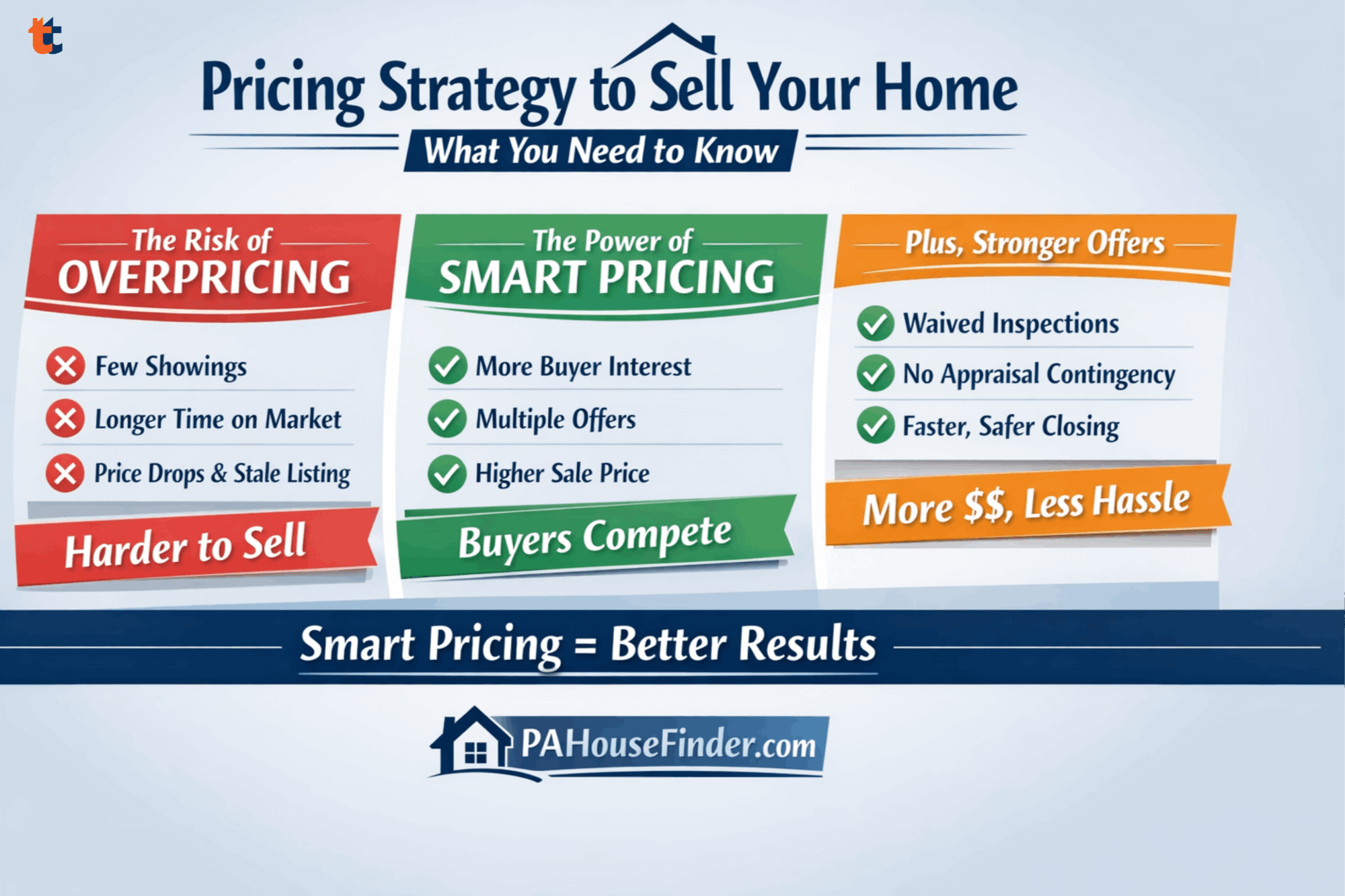
The Biggest Mistake Sellers Make: Overpricing
Overpricing usually comes from good intentions.
Maybe the seller:
-
Wants room to negotiate
-
Thinks buyers will “make an offer anyway”
-
Heard what a neighbor sold for
-
Saw an optimistic Zestimate
Unfortunately, the market doesn’t reward optimism.
It rewards accuracy.
When a home is priced too high, buyers don’t rush in to negotiate.
Most of them simply skip the listing entirely.
Why?
Because today’s buyers are extremely well informed. They’re looking at:
-
comparable sales
-
price per square foot
-
neighborhood trends
-
days on market
If a listing feels overpriced, it doesn’t spark curiosity.
It creates suspicion.
The First Two Weeks Are Everything
When a home first hits the market, it gets the most attention it will ever receive.
Buyers who have been waiting for new inventory see it immediately.
Agents bring their clients quickly.
Online platforms boost new listings.
This is your prime window of opportunity.
If the home is priced correctly during this period, you often see:
-
strong showing activity
-
multiple offers
-
faster sales
-
stronger final prices
But if the price is too high?
That initial excitement fades, and the listing begins to age on the market.
And aged listings develop a stigma.
Buyers start asking:
-
“What’s wrong with it?”
-
“Why hasn’t it sold?”
-
“Maybe we should wait for a price drop.”
Why Price Reductions Rarely Recover Lost Momentum
Once a listing sits for a while and then drops the price, something important has already happened:
The most motivated buyers have already moved on.
Even when the price becomes reasonable later, the listing often struggles to regain its original momentum.
Instead of attracting excitement, the home becomes something buyers view cautiously.
What Smart Pricing Actually Looks Like
Pricing a home correctly isn’t about guessing.
It involves analyzing:
-
recent comparable sales
-
active competing listings
-
price trends
-
buyer demand in that specific price range
The goal is to position the home where buyers feel:
“This is worth seeing right away.”
That reaction is what drives showings, offers, and competition.
A Powerful Strategy in a Seller’s Market
Here’s something that surprises many sellers.
In a strong seller’s market, one of the most effective strategies is often to list slightly below where the home should ultimately sell.
This might mean pricing the home 10–15% below the expected market value.
Why would anyone do that?
Because it does three powerful things:
1. Creates Immediate Attention
Buyers feel urgency when a home appears to be a strong value.
2. Increases Showing Activity
More buyers see the home in their search range, which brings more traffic through the door.
3. Encourages Multiple Offers
When buyers know they’re competing, they often write their strongest offer right from the start.
And this is where things get really interesting.
When several buyers compete for the same property, sellers frequently receive offers that include:
-
Waived inspection contingencies
-
Waived appraisal contingencies
-
Flexible closing timelines
-
Stronger earnest money deposits
In other words, the seller often ends up with not just a higher price, but also a much safer transaction.
With fewer contingencies in place, there are fewer opportunities for a buyer to renegotiate or terminate the deal later.
When done correctly, this strategy doesn’t leave money on the table.
It often maximizes the final sale price while reducing risk and time on market.
The Goal Isn’t the Highest List Price
The goal of pricing strategy isn’t to impress people with a big number.
The goal is to create the conditions where buyers compete.
Because when buyers compete, sellers win.
Bottom Line
Overpricing makes selling a home dramatically harder.
Correct pricing creates momentum.
Momentum creates competition.
Competition creates the best results.
If you're thinking about selling in Central PA, the smartest first step isn’t choosing a price.
It’s understanding the strategy behind it.